
Weighted Vest Walking: Good for Your Bones, Bad for Your Knees?
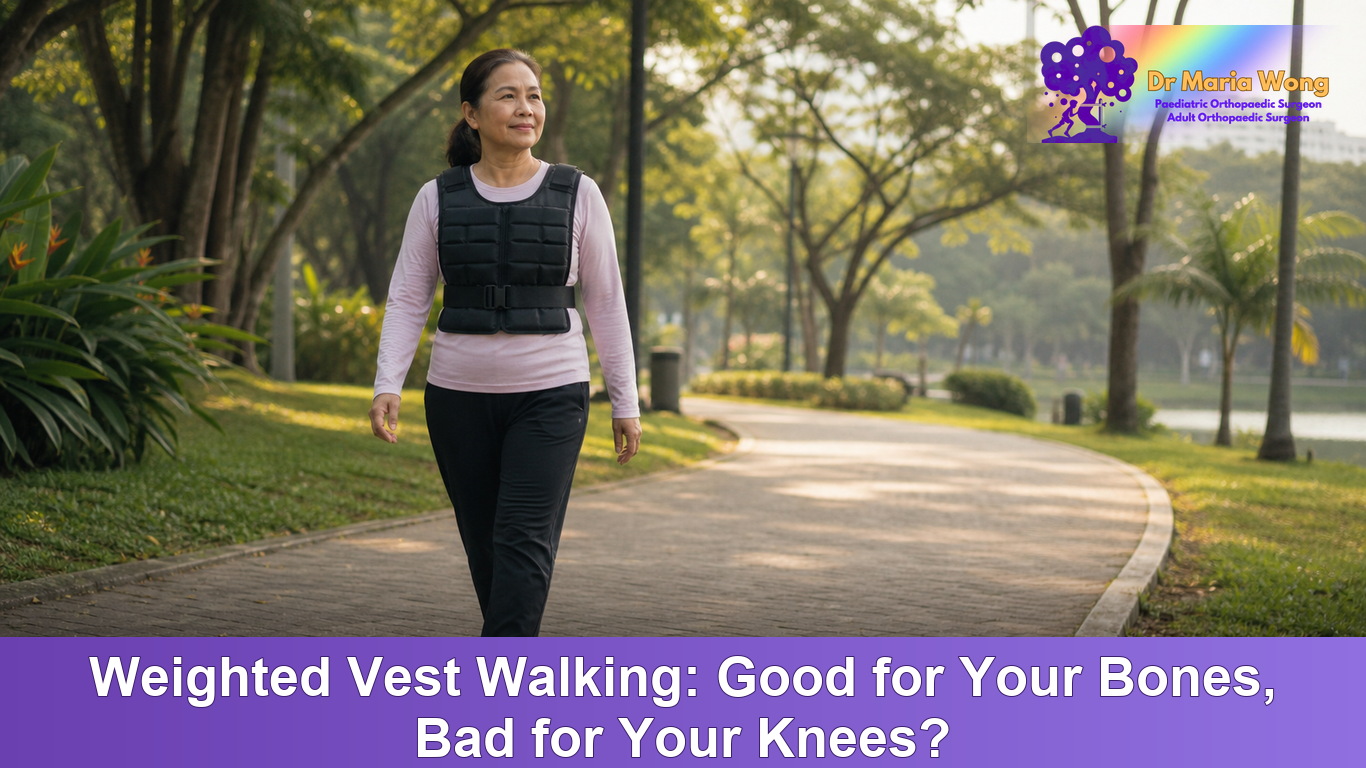
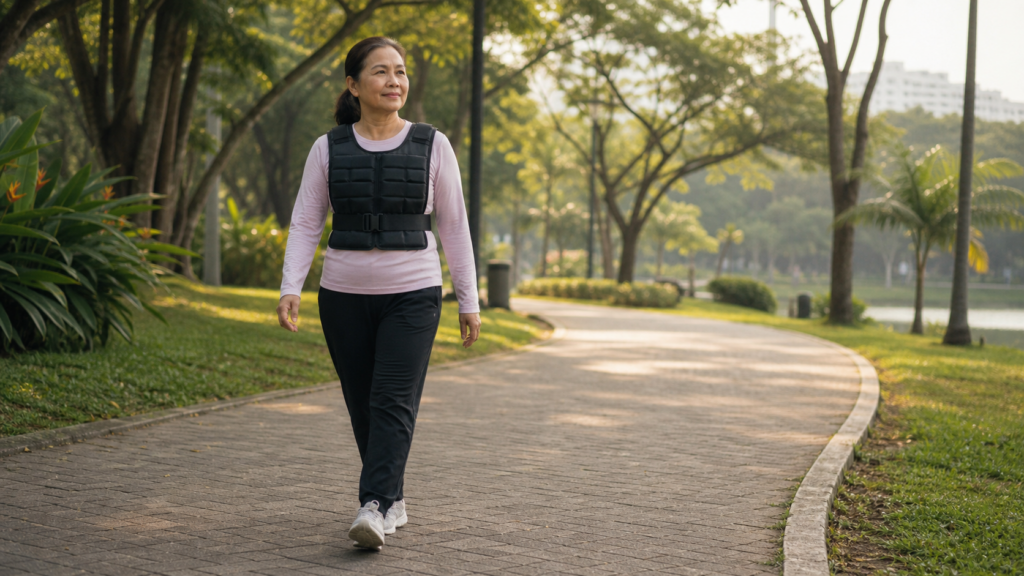
The search phrase “weighted vest walking knees” captures a sensible concern. Adding weight can make an ordinary walk more challenging and may give bones a stronger loading signal. However, every extra kilogram also increases the work done by the knees, hips, ankles, feet and back.
Weighted-vest walking and rucking have become major fitness trends in 2026. Recent orthopaedic and primary care features from Healio reflect the growing interest. Yet the useful answer is not simply “good” or “bad”. It depends on your current joint health, the amount carried, the route, your pace and how quickly you progress.
As an orthopaedic surgeon, I would view a weighted vest as an optional training tool. It is not a shortcut to stronger bones, and pain is not proof that the exercise is working.
Weighted Vest Walking and Rucking: What Is the Difference?
Weighted-vest walking means wearing a close-fitting vest with fixed or removable weights. The weight is usually spread across the front and back of the torso.
Rucking traditionally means walking with weight in a rucksack or backpack. It comes from military load-carriage training. Recreational rucking is usually less intense, but the same word is used for anything from a light walk with a daypack to a long, fast march with a heavy load.
For a beginner whose aim is fitness walking, I generally prefer a well-fitted adjustable vest over an ordinary backpack. A vest keeps the load close to the body and makes it easier to distribute the weight evenly. A loose backpack may bounce or pull the trunk backwards, causing the walker to lean forwards. However, a vest does not remove the extra load from the knees. A properly fitted hiking rucksack with a hip belt is also different from an improvised bag filled with heavy objects.
What Are the Real Weighted Walking Benefits?
The clearest weighted walking benefit is that the same route becomes harder. Your legs and trunk must control more mass. Your heart rate and energy use may rise, especially when speed, gradient or load increases.
Possible benefits include:
- A more demanding cardiovascular workout without having to run.
- More work for the leg and trunk muscles during each step.
- A convenient way to progress a walking programme when time is limited.
- Hands-free loading, which may feel more natural than carrying dumbbells.
- A new challenge that helps some people stay interested in regular walking.
These benefits do not make a vest essential. A faster unweighted walk, a gentle hill, stairs and a proper resistance-training programme can also increase exercise demand. In addition, a vest does not train the upper body through a full range of movement. It should not replace exercises such as rows, presses and safe lifting.
Does Weighted Vest Walking Improve Bone Density?
Bones respond to mechanical load. That makes the idea behind weighted vest bone density training reasonable: add external weight, and the skeleton experiences a larger load while you move. However, a sound idea is not the same as a proven result.
The research is mixed and often studies very specific groups:
- A small five-year study of 18 postmenopausal women found that a programme combining weighted-vest exercise with jumping helped maintain hip bone mineral density. However, the study was very small, and it cannot tell us whether ordinary weighted walking alone would produce the same result.
- A 12-week randomised trial of 48 working women compared treadmill walking with and without a vest. The vest was gradually increased to 8% of body weight. Both groups improved fitness, but there was no significant difference between groups in the measured bone-turnover markers or physical fitness.
- The larger 2025 INVEST in Bone Health randomised clinical trial followed 150 older adults with obesity during weight loss. Wearing a vest for much of the day, with the load adjusted to replace lost weight, did not prevent hip bone loss. This was not a simple 30-minute walking study, so it does not answer every question about recreational weighted-vest walking.
Therefore, I would not promise that a weighted vest will increase bone density or prevent a fracture. The Bone Health and Osteoporosis Foundation also describes the evidence as uncertain. For bone health, weight-bearing activity, resistance exercise, balance work, adequate nutrition and prescribed osteoporosis treatment all matter. A vest may be one part of that plan, but it is not the whole plan.
Is Rucking Bad for Your Joints?
Rucking knee pain often comes from several training changes added at once. A person may buy a heavy vest, walk faster, choose a hilly route and double the usual distance in the same week. The knees then receive more load per step and more total loaded steps.
Other common contributors include:
- A vest that bounces, shifts or carries more weight on one side.
- Long downhill sections, which can be demanding for the front of the knee.
- Overstriding to maintain a fast pace.
- Worn or uncomfortable footwear.
- Starting while an old injury is still irritable.
- Too little recovery between loaded walks.
Importantly, higher joint load does not prove that a person is damaging cartilage or “wearing out” the knee. It does mean that dose matters. Pain, swelling and loss of normal movement are signs that the current dose is too much or that another problem needs assessment.
How to Choose a Safe Weighted Vest Weight
For a healthy beginner who already walks comfortably, 5% of body weight is a sensible starting point. The often quoted 5% to 10% range should be treated as a progression range, not a challenge to begin at the top. I would keep 10% as a conservative ceiling for unsupervised recreational walking. More weight is not automatically more useful.
| Body weight | Start near 5% | Conservative 10% ceiling |
|---|---|---|
| 50 kg | 2.5 kg | 5 kg |
| 60 kg | 3 kg | 6 kg |
| 70 kg | 3.5 kg | 7 kg |
| 80 kg | 4 kg | 8 kg |
| 90 kg | 4.5 kg | 9 kg |
Round down to the nearest weight your vest can hold. If 5% feels awkward, start lighter. People with low fitness, a smaller frame, joint symptoms or past injuries may need to begin with an empty vest or no vest at all.
A Safer 30- to 45-Minute Weighted Walking Plan
Thirty to 45 minutes is a useful eventual session length, not the correct first session for everyone. Build towards it only if ordinary walking is already comfortable.
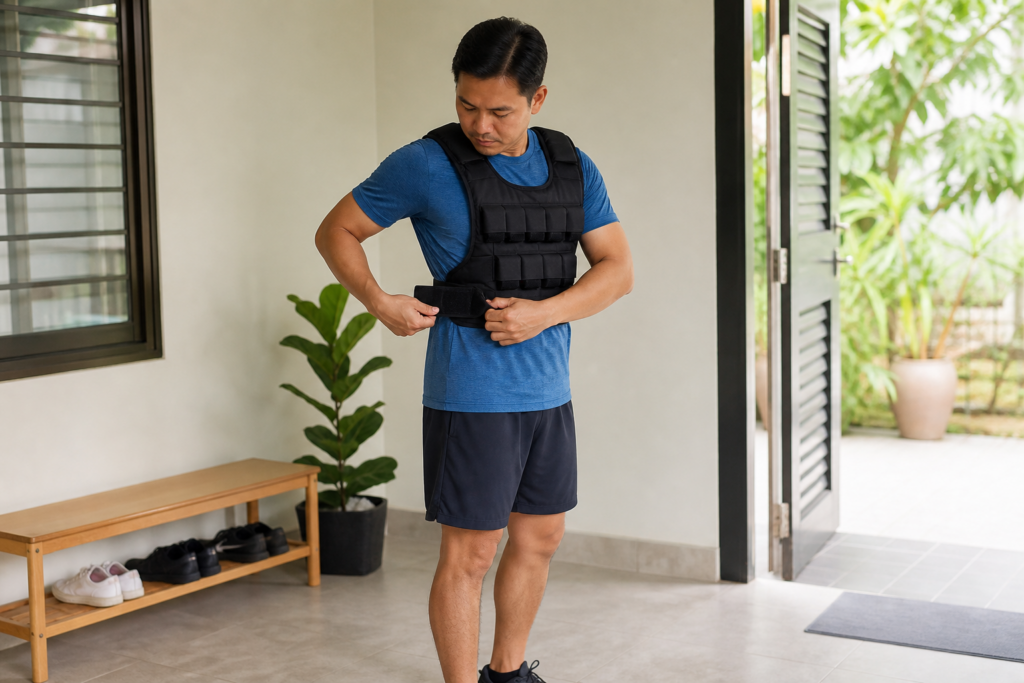
- Check the vest first. Wear it empty for 10 minutes. It should not restrict breathing, rub the neck, press painfully on the shoulders or bounce with each step.
- Begin light. Add about 5% of body weight, or less if needed. Spread removable weights evenly from side to side and front to back.
- Use a simple route. Start with 10 to 15 minutes on a flat, familiar surface at your normal pace. Avoid hills, stairs, trails and speed targets at first.
- Check the next day. Normal effort and mild muscle tiredness should settle. Joint pain, swelling, limping or focal bone tenderness means you should stop loaded walking.
- Add time before weight. If symptoms remain settled, add about five minutes to a later session. Work towards 30 minutes, then 45 minutes if that duration suits your goals.
- Leave recovery time. Two or three loaded walks per week are enough for a beginner. Keep at least one unweighted or rest day between them.
- Change one variable at a time. Do not increase vest weight, distance, speed and hills in the same week.
In Malaysia’s heat and humidity, choose a cooler part of the day, take water and stop if you feel dizzy, unusually breathless or unwell. The vest adds insulation as well as weight.
When to Stop Weighted Vest Walking
Remove the vest and stop the session if you develop:
- Sharp or increasing pain in the knee, hip, ankle, foot or back.
- Swelling, limping or pain that changes your normal stride.
- A knee that locks, catches or gives way.
- One small area of marked bone tenderness.
- Numbness, tingling or weakness.
- Dizziness, chest pain or unusual shortness of breath.
Arrange an assessment if pain persists after the vest is removed, returns during ordinary walking, wakes you at night or is getting worse. Sudden severe pain, inability to bear weight, major swelling or a fall needs prompt medical attention.
Who Should Get Advice Before Trying a Vest?
Speak with your doctor, orthopaedic surgeon or physiotherapist before starting if you have known osteoporosis, a previous spine fracture, spine surgery, a high risk of falling, significant arthritis, a joint replacement, a recent injury, heart or lung disease, or unexplained pain.
This is particularly important for a weighted vest for osteoporosis. Poorly chosen load or a fall can cause harm, and some spinal movements may be unsafe after a vertebral fracture. A personalised programme can combine suitable weight-bearing activity with resistance and balance exercise. It can also address calcium, vitamin D, protein, medicines and fall prevention where needed.
Conclusion
Weighted-vest walking is neither a miracle for bones nor automatically bad for knees. The extra load can make walking more demanding, but evidence that the vest itself improves bone density is still limited and mixed. At the same time, load-carriage research confirms that added weight increases demands on the knees and other tissues.
For a healthy walker, choose a snug, evenly loaded vest over an improvised backpack, start near 5% of body weight, use short flat walks and progress towards 30 to 45 minutes. Do not rush towards 10%. If you have arthritis, a past injury, osteoporosis or new rucking knee pain, get individual advice before adding more load.

Contact & Request Appointment
Schedule a consultation by using the form below, or calling her clinic or using the online booking button.
Please note that consultation is ONLY by appointment – no walk-ins.
Appointment Form 🇲🇾
NOTE: To avoid disappointment with walk-ins patients and same day appointments requests, proper appointment is necessary as the doctor may not be available all the time in clinic as she may be performing surgery.
Clinic Contact
7B-07, Level 7, Sunway Medical Centre Velocity,
Lingkaran Sunway Velocity, Sunway Velocity,
55100 Kuala Lumpur, Malaysia 🇲🇾
Mon & Fri: 10:30 – 12:30
Tue & Wed: 10:30 – 16:30
Sat: 9:00 – 12:30
Thu & Sun: Closed
L5-36, Sunway Medical Centre Damansara,
No. 2, Jalan PJU 5/1a, Kota Damansara, PJU 5,
47810 Petaling Jaya, Selangor Darul Ehsan, Malaysia 🇲🇾
Mon & Fri: 14:00 – 17:00
(by appointment only)

