
Creatine for Women Over 40: What It Does for Muscle — and What It Doesn’t Do for Bone
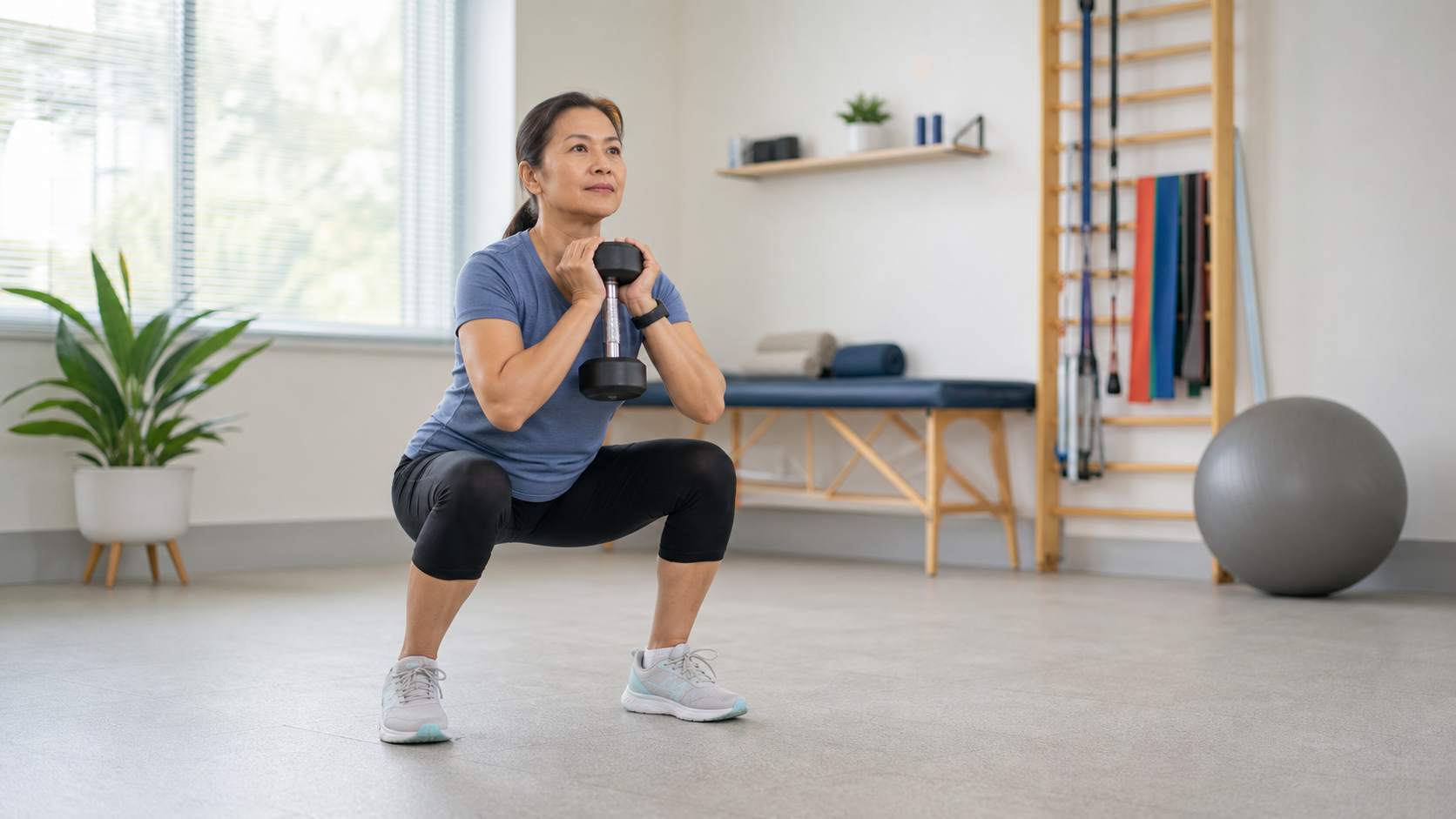
If you are searching for creatine for women bone health advice, the most important point is simple. Creatine may help women over 40 gain a little more lean mass and strength when it is paired with resistance training. However, it has not been shown to increase bone mineral density. It is a muscle-support supplement, not an osteoporosis treatment.
Creatine has moved from bodybuilding circles into mainstream women’s health coverage. In July 2026, it was being discussed in both coverage aimed at women over 30 and a more detailed review of the evidence for women’s health. The interest is understandable. Muscle mass and strength usually peak in early adulthood and then gradually decline. Menopause can add another challenge.
As an orthopaedic surgeon, I welcome the stronger focus on muscle mass in midlife. Strong muscles help us climb stairs, lift, exercise, support painful joints and recover from injury. They also improve balance, which may reduce falls. However, a popular supplement should still be judged by what clinical trials actually measured.
What Is Creatine and How Does It Work?
Creatine is a natural substance made by the body. We also obtain small amounts from foods such as meat and fish. Most creatine is stored in muscle as phosphocreatine.
During a short, hard effort, such as lifting a weight or rising quickly from a low chair, muscle needs energy fast. Phosphocreatine helps the body remake adenosine triphosphate, or ATP. ATP is the immediate energy source used by muscle cells.
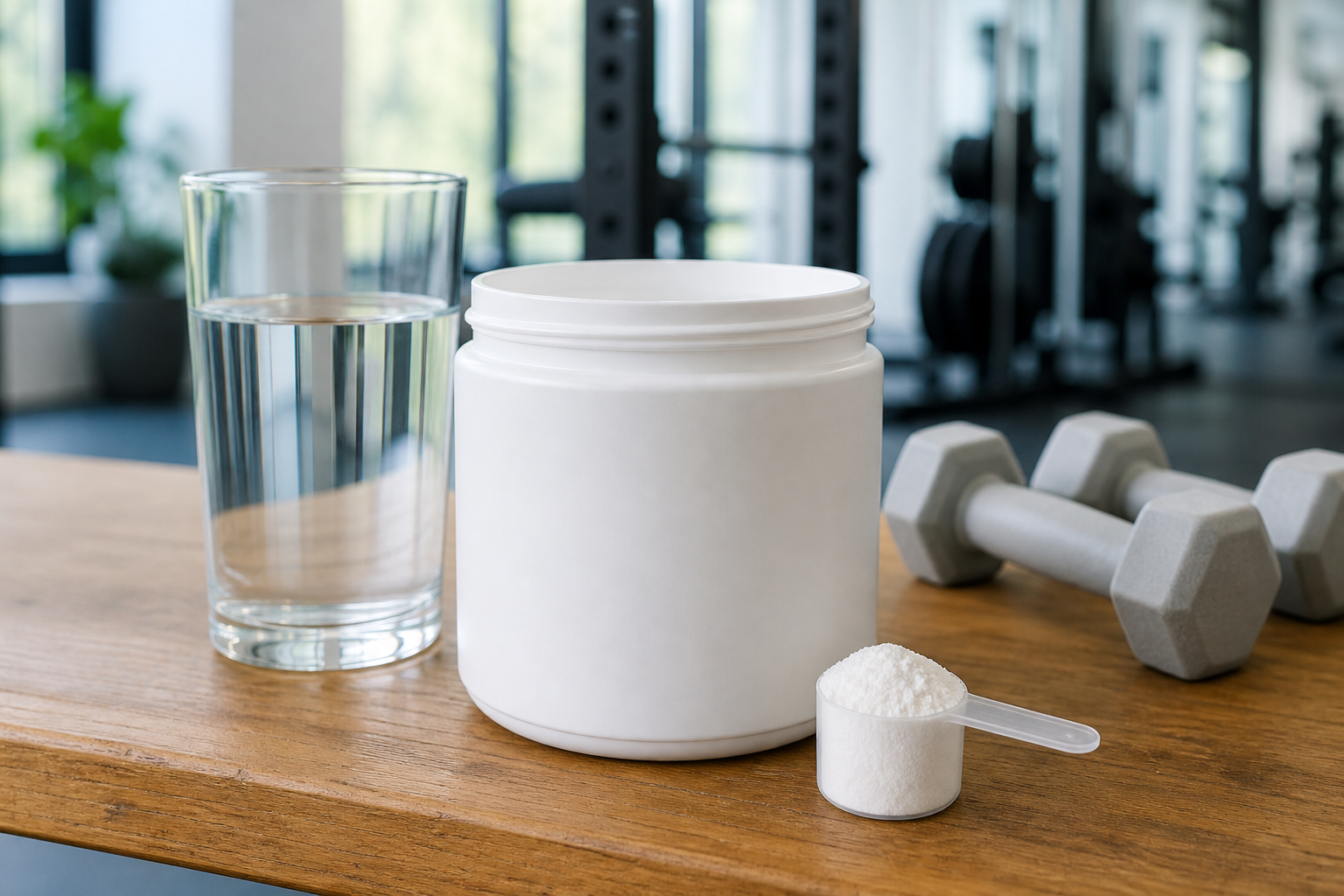
Taking creatine monohydrate can increase the amount stored in muscle. As a result, some people can complete a little more work during repeated, high-effort exercise. Over weeks and months, that extra training capacity may lead to modestly greater strength and lean mass.
Creatine does not directly switch on new muscle while you sit still. The exercise provides the reason for the body to adapt. Creatine may support that process.
Why Muscle Mass in Midlife Matters
The US National Institute on Aging notes that muscle mass and strength tend to peak at about 30 to 35 years of age. After that, the direction slowly changes. The often-quoted loss of 3% to 5% of muscle per decade is a broad estimate, not a prediction for every woman. Activity, illness, nutrition, hormones and genetics all matter.
Sarcopenia is the more advanced loss of muscle strength, quantity and physical function that can occur with ageing. It is not diagnosed simply because a scan shows slightly less lean mass. Grip strength, walking speed and the ability to rise from a chair can be more useful than appearance alone.
For sarcopenia prevention, the basics are still progressive resistance exercise, adequate food and protein, recovery, and treatment of health problems that reduce activity. Creatine over 40 can be an optional extra. It is not the foundation.
What Does the Research Show for Women?
The strongest direct evidence is in postmenopausal women, not every woman over 40. A 2026 systematic review and meta-analysis pooled seven randomised trials involving 608 postmenopausal women, with an average age of about 62.
On average, creatine increased lean mass by 0.37 kg compared with placebo. In three smaller trials, leg-press strength improved by an additional 7.5 kg. The clearer results came when at least 5 g per day was combined with resistance training. Low-dose creatine without training did not produce a measurable benefit.
These are averages, not guarantees. A 0.37 kg change in lean mass is modest. In addition, a DXA scan records lean tissue, which includes water as well as muscle. Creatine draws some water into muscle cells, especially early on. Therefore, not every increase on a body-composition scan represents new muscle protein.
| What creatine may do | What creatine does not do |
|---|---|
| Increase phosphocreatine stored in muscle | Provide energy for every type of exercise or remove the need for recovery |
| Support small extra gains in strength and lean mass during resistance training | Build meaningful muscle without a training stimulus |
| Help with repeated short, hard efforts | Act as a fat burner or guarantee weight loss |
| Help muscle function, which supports balance and joint control | Rebuild cartilage, cure joint pain or make an injured joint stable |
| Be a reasonable optional supplement for some healthy women who train | Treat osteopenia, osteoporosis or proven bone loss |
Does Creatine Improve Bone Density?
At present, the answer is no. A 2018 meta-analysis found no additional benefit from creatine for bone mineral density at the whole body, hip, femoral neck or lumbar spine when older adults were doing resistance training. The 2026 review of postmenopausal women reached the same practical result: bone density was unchanged overall.
A large two-year randomised trial is especially useful. It included 237 postmenopausal women who followed resistance training and walking programmes. Adding creatine did not improve bone mineral density at the femoral neck, total hip or lumbar spine.
The trial did find better changes in some measurements of hip geometry. These secondary findings are interesting. However, they do not prove that creatine prevents fractures. The study’s main bone-density result was negative, and the geometry findings need to be confirmed.
There is also evidence that creatine alone is not enough. In a separate two-year trial of 200 postmenopausal women with osteopenia, 3 g per day did not improve bone density, bone structure, falls or fractures compared with placebo.
Therefore, marketing claims that creatine “builds bone” go beyond the evidence. A stronger muscle can pull on bone and help a person train more safely. Better strength and balance may also lower fall risk. These are valuable indirect benefits, but they are not the same as raising bone density.
What Actually Supports Bone Health After 40?
Bone health needs its own plan. The Malaysian Clinical Practice Guidelines for osteoporosis recommend adequate calcium and vitamin D, regular physical activity and weight-bearing exercise. For people with osteoporosis or high fracture risk, lifestyle measures are combined with proven medical treatment when needed.
- Use bone-loading exercise. Walking is useful, but progressive resistance exercise and suitable weight-bearing or impact activity give bone a clearer loading signal.
- Meet calcium and vitamin D needs. Food is usually the first place to start. Supplements are useful when intake is low or deficiency is present, not simply because more must be better.
- Know your fracture risk. Early menopause, a previous low-trauma fracture, low body weight, long-term steroid treatment, family history and several medical conditions can increase risk.
- Have bone density assessed when appropriate. A doctor may recommend a DXA scan based on age and risk factors. Creatine does not change the need for proper assessment.
- Treat osteoporosis properly. If osteoporosis is diagnosed, a supplement should not delay medicine that has been shown to reduce fractures.
How Muscle Helps Protect Joints
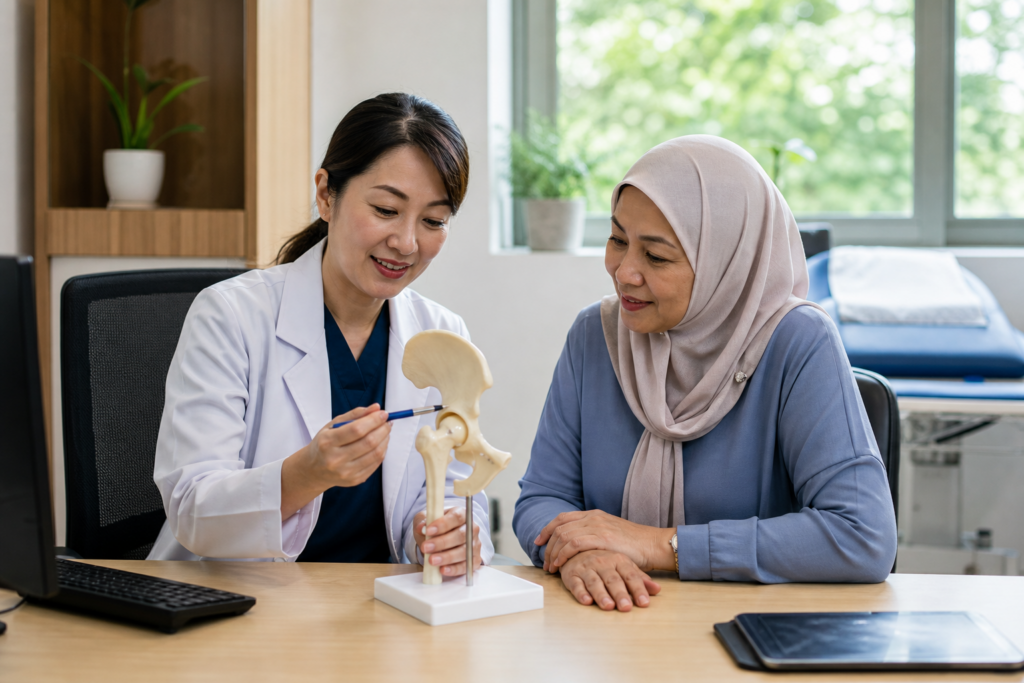
Muscle does not coat or regrow cartilage. However, strong muscles around the hip, knee, ankle, shoulder and spine help control movement and share load. For example, stronger thigh and hip muscles can make stairs, squats and walking easier for many people with knee pain.
Strength also supports balance and confidence. This matters when a woman is returning to activity after injury or trying to reduce fall risk. In that sense, a supplement that helps training may have an indirect orthopaedic benefit.
However, creatine is not a treatment for a meniscus tear, tendon injury, arthritis flare, fracture or unstable joint. If your main question is whether a joint supplement can help symptoms, see my companion guide to collagen supplements for joints . Collagen and creatine are different molecules with different claims, but neither should replace a diagnosis and a suitable exercise plan.
How to Take Creatine If You Choose to Try It
For healthy adults who want to use creatine with resistance training, the practical approach is usually straightforward.
- Choose creatine monohydrate. It is the most studied form. A more expensive “women’s” formula is not automatically better.
- Use a simple daily dose. Many studies and sports nutrition guidance use 3 to 5 g per day. The 2026 postmenopausal review found clearer muscle benefits with at least 5 g per day plus training.
- A loading phase is optional. Taking a standard dose each day fills muscle stores more gradually and is easier on the stomach for some people.
- Be consistent. Morning versus evening is less important than taking it regularly. It can be mixed with water or another drink.
- Keep the product simple. Look for a clear ingredient list and dose. In Malaysia, check products through the Ministry of Health guidance on registered products .
- Review the result. Track strength, repetitions, walking, stairs and training tolerance over several weeks. Do not judge it only by body weight.
Creatine does not need to be cycled. However, there is also no need to continue indefinitely if you are not training, do not notice a useful effect or dislike the cost or side effects.
Creatine Safety for Women
Creatine monohydrate is generally well tolerated in healthy adults at studied doses. The 2026 review in postmenopausal women found that adverse events were mild and similar to placebo. Kidney measures were unchanged.
A 2025 systematic review of kidney function found a small rise in blood creatinine, but no significant reduction in glomerular filtration rate. This distinction matters. Creatinine is a breakdown product related to creatine, so the blood result can rise slightly without kidney damage. Tell your doctor that you take creatine before a kidney blood test so the result can be interpreted in context.
Possible effects include mild stomach upset, loose stools or a small increase on the scale from water held within muscle. Taking a standard dose instead of a large loading dose may reduce stomach symptoms. The weight change is not the same as gaining body fat.
Speak to your doctor or pharmacist before using creatine if you have kidney disease, significant liver disease, complex medical conditions, take medicines that affect kidney function, or are pregnant or breastfeeding. Safety data in these groups are more limited. Stop and seek advice if you develop a worrying reaction.
Who Is Most Likely to Benefit?
Creatine may be worth considering if you are a healthy woman who already does progressive resistance training, wants modest extra support for strength or lean mass, and understands that results vary. The evidence is most encouraging in postmenopausal women who combine about 5 g per day with structured training.
It is less likely to help if you are taking it without strength work, expecting rapid fat loss, using it instead of eating enough protein, or hoping it will treat osteopenia. It also cannot make an unsafe exercise programme safe.
When to See an Orthopaedic Surgeon
A supplement question sometimes begins with a more important clinical problem. Consult an orthopaedic surgeon if pain is persistent, worsening, linked to swelling or injury, causes a limp, wakes you at night, or stops you from doing normal activity. Sudden inability to bear weight, deformity, a hot swollen joint or a suspected fracture needs prompt assessment.
Also seek a medical bone-health review after a low-trauma fracture or if you have important osteoporosis risk factors. Do not wait for creatine, calcium, collagen or another supplement to solve a condition that needs diagnosis and treatment.
Conclusion
Creatine for women over 40 is not just hype. When combined with resistance training, creatine monohydrate may provide small additional gains in lean mass and strength. This can support movement, balance and joint control.
However, the bone claim is different. Meta-analyses in 2018 and 2026, along with two-year randomised trials, have not shown an improvement in bone mineral density. Creatine does not treat osteopenia or osteoporosis.
The best midlife plan is therefore not “creatine or exercise”. It is progressive strength training, adequate nutrition, good recovery and proper bone-risk assessment. Creatine can sit beside that plan for some women. It should never be mistaken for the plan itself.

Contact & Request Appointment
Schedule a consultation by using the form below, or calling her clinic or using the online booking button.
Please note that consultation is ONLY by appointment – no walk-ins.
Appointment Form 🇲🇾
NOTE: To avoid disappointment with walk-ins patients and same day appointments requests, proper appointment is necessary as the doctor may not be available all the time in clinic as she may be performing surgery.
Clinic Contact
7B-07, Level 7, Sunway Medical Centre Velocity,
Lingkaran Sunway Velocity, Sunway Velocity,
55100 Kuala Lumpur, Malaysia 🇲🇾
Mon & Fri: 10:30 – 12:30
Tue & Wed: 10:30 – 16:30
Sat: 9:00 – 12:30
Thu & Sun: Closed
L5-36, Sunway Medical Centre Damansara,
No. 2, Jalan PJU 5/1a, Kota Damansara, PJU 5,
47810 Petaling Jaya, Selangor Darul Ehsan, Malaysia 🇲🇾
Mon & Fri: 14:00 – 17:00
(by appointment only)

