
Leg Pain When Walking: Could It Be Spinal Stenosis?
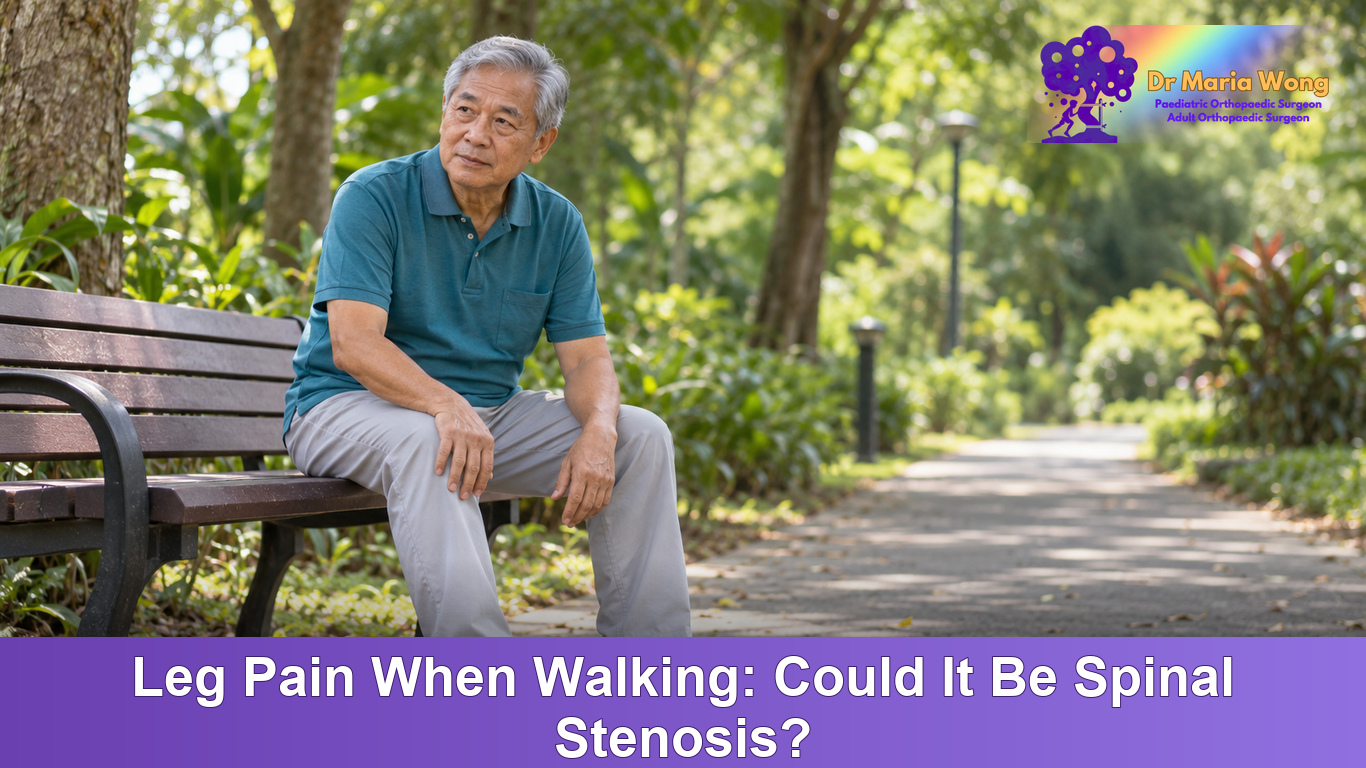

Spinal stenosis symptoms can include leg pain when walking, tingling, or numbness that makes you stop for a rest. The problem may begin in the lower back, even when the legs are what trouble you most. However, aching legs do not always mean a spine problem. Hip or knee arthritis and reduced blood flow can also make walking uncomfortable.
Each year on 16 October, the World Spine Day campaign raises awareness of spinal pain and disability. However, a change in your walking deserves attention at any time of year. Recognising it can be a first step towards getting the right help.
As an orthopaedic surgeon, I look at where the discomfort starts, what brings it on, and what makes it settle. Those details help guide the assessment.
What Is Lumbar Spinal Stenosis?
Lumbar spinal stenosis means narrowing of the spaces for the nerves in the lower back. The spinal canal is a tunnel within the spine. Nerve roots travel through it before passing out towards the legs. Narrowing may affect this central tunnel or the smaller openings where nerves leave.
Over time, discs can lose height or bulge, joints can develop bony growths, and nearby ligaments can thicken. Together, these changes leave less room for the nerves. Pressure on those nerves may then cause symptoms in the buttocks, legs or feet.
It becomes more common with age. However, younger adults can also develop it, particularly if they were born with a smaller spinal canal. Some people have narrowing without any symptoms. The NIAMS overview of spinal stenosis explains these causes and patterns.
Spinal Stenosis Symptoms to Notice
Symptoms often develop gradually. They may affect one leg or both, and can include:
- Aching, burning or cramping in the buttocks or legs.
- Pins and needles or leg numbness when standing.
- A feeling of weakness in a leg or foot.
- Discomfort that builds during a walk or while standing in a queue.
- Relief after sitting down or bending forwards.
Lower back pain may occur too, but it is not always the main complaint. As Mayo Clinic’s symptom guide describes, the pattern depends on which part of the spine is affected.
Why Does Walking Hurt but Sitting Help?
Standing upright and walking can reduce the space available around already crowded nerves. Bending forwards can give them more room. This helps explain why some people find it easier to walk while leaning on a shopping trolley. The American Academy of Orthopaedic Surgeons describes this position-related pattern.
Doctors call walking or standing symptoms caused by this nerve pressure neurogenic claudication. For example, someone may need to sit halfway through a familiar walk, then feel able to continue after resting. However, leg pain relieved by sitting is a clue, not a home test that confirms spinal stenosis.
Could It Be Joint Pain or Poor Circulation Instead?
The following patterns can help explain why an examination matters. They overlap, and more than one condition can be present.
| Possible cause | Typical clues | What may ease it? |
|---|---|---|
| Lumbar spinal stenosis | Leg pain, tingling or numbness during standing or walking. | Sitting or bending forwards often helps. |
| Hip or knee arthritis | Pain around a joint, with stiffness or reduced movement. Hip pain may be felt in the groin; knee pain may worsen on stairs. | Reducing the painful activity may help, although pain can also occur at rest. |
| Peripheral arterial disease | Aching or cramping with walking because the leg muscles receive too little blood. | Stopping to rest often helps within minutes, without needing to bend forwards. |
These comparisons draw on NHS information on lumbar stenosis, osteoarthritis symptoms and peripheral arterial disease.
Circulation needs particular attention if you smoke, have diabetes, or notice wounds on the feet that are slow to heal. Do not assume that every episode of leg pain when walking comes from a scan finding in your back.
When Leg Symptoms Need Urgent Help
Go to an emergency department immediately if back or leg symptoms occur with any of these new changes:
- Difficulty starting to pass urine, inability to empty the bladder, or loss of bladder control.
- Loss of bowel control or reduced awareness of passing stool.
- Numbness around the genitals, anus or inner thighs.
- A sudden change in sexual sensation or function.
These can indicate cauda equina syndrome, a rare emergency involving nerves that control bladder, bowel and other functions. Do not wait for all the symptoms to appear. See the Somerset NHS warning signs.
Rapidly worsening leg weakness or a new inability to walk also needs emergency assessment. New foot drop, where you cannot lift the front of the foot properly, needs prompt medical review. Cambridge University Hospitals explains the neurological warning signs.
A suddenly painful, cold, pale or numb leg may signal an urgent loss of blood supply. Seek emergency care immediately for this pattern too. Cleveland Clinic explains acute limb ischaemia.
How an Orthopaedic Surgeon Assesses the Problem
Assessment starts with your symptoms and a physical examination. I would ask how far you can walk, whether standing alone brings on symptoms, and whether simply stopping helps or you need to sit.
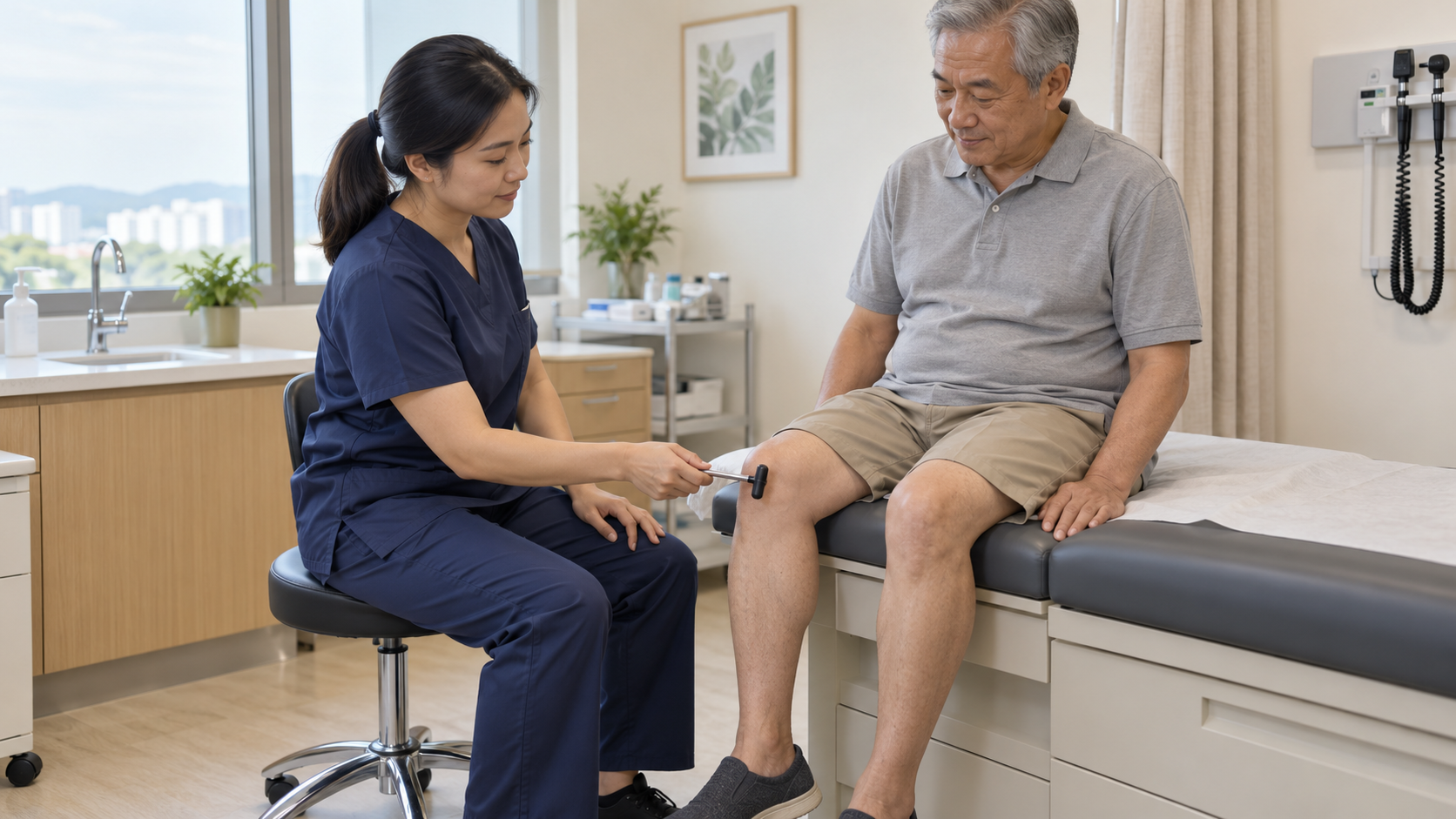
The examination may include your walking pattern, balance, leg strength, reflexes, sensation, and movement of the back, hips and knees. Foot pulses and skin changes help assess circulation. If reduced blood flow is suspected, a clinician may compare blood pressure at the ankle and arm. This is called an ankle–brachial pressure index. NHS guidance describes circulation testing.
An MRI can show the nerves, discs and narrowed spaces. An X-ray mainly shows bone and alignment. Scans are considered when they will help clarify the problem or guide treatment. A scan result alone does not decide whether you need surgery. It must fit the symptoms and examination, as explained in the NIAMS diagnosis and treatment guide.
Spinal Stenosis Treatment Without Surgery
Treatment aims to make daily activity more manageable. Depending on the assessment, a plan may include:
- Physiotherapy: gradual exercise to support strength, movement and endurance.
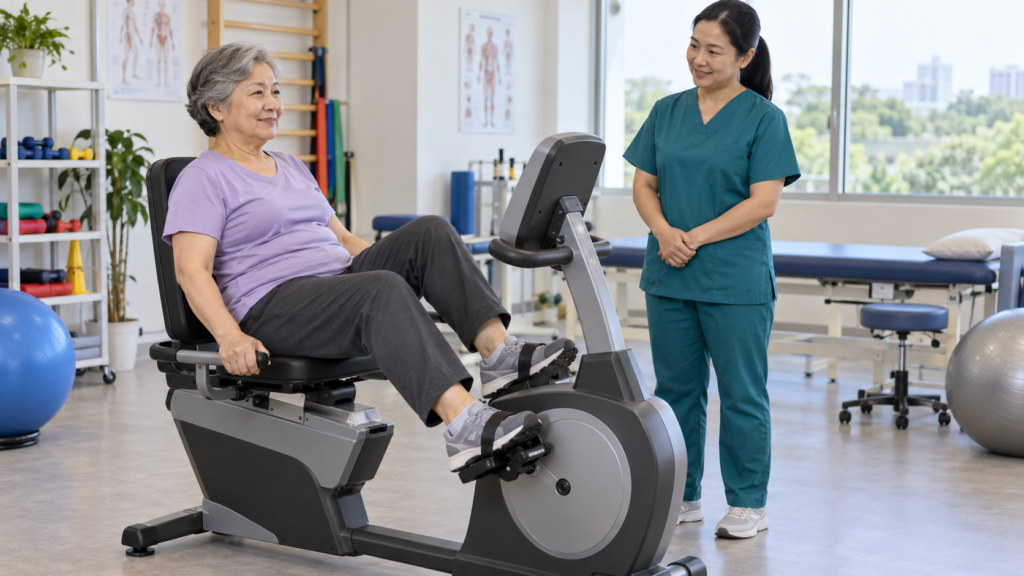
- Activity adjustments: shorter walks with planned breaks, or a comfortable alternative such as stationary cycling.
- Walking support: an appropriately fitted aid if needed for safety and confidence.
- Medicines: pain relief selected around your health and other medicines.
These approaches can ease symptoms, but they do not permanently widen the spinal canal. Anti-inflammatory medicines need care because they can affect the stomach and kidneys. Discuss suitable options with your doctor or pharmacist. The AAOS treatment guide outlines these limits.
Spinal stenosis exercises should suit your symptoms and ability. Build up gradually with guidance, and report increasing numbness or weakness. The NIAMS self-care guidance supports pacing activity and choosing suitable exercise.
Do Spinal Injections Help?
Injections are not suitable for every type of leg pain. NICE advises against epidural injections for neurogenic claudication caused by narrowing of the central spinal canal. It makes a separate recommendation that an epidural may be considered for acute, severe sciatica. Therefore, the exact diagnosis matters when discussing an injection. Read the NICE recommendations on epidurals.
When Is Surgery Considered?
Surgery may be discussed when symptoms continue to limit walking and daily life despite suitable non-surgical care. Significant or worsening nerve weakness may need earlier assessment.
Decompression surgery creates more room for the nerves by removing tissue causing pressure. A spinal fusion, which joins bones together, is needed only in selected cases, such as when the spine is unstable. Leg symptoms often improve more reliably than back pain. AAOS explains the surgical options.
Benefits must be weighed against risks, including nerve injury, a spinal fluid leak and symptoms that persist. Recovery varies with the operation and your health. An orthopaedic surgeon can explain what improvement is realistic for you. The NHS decompression guide outlines recovery and possible complications.
What to Note Before Your Appointment
If leg pain keeps returning or your walking distance is shrinking, arrange an assessment. A short symptom diary can help. Note where the discomfort starts, roughly how long you can stand or walk, and what makes it settle. Include any numbness, weakness or falls, and bring a list of your medicines.
Conclusion
Spinal stenosis symptoms often follow a recognisable pattern: leg discomfort with standing or walking that eases when you sit or bend forwards. However, joint and circulation problems can look similar. Take a change in your walking seriously. A careful assessment by an orthopaedic surgeon can identify the cause and help you choose suitable treatment.
This article provides general information and does not replace an individual medical assessment. Images are AI-generated illustrations, not photographs of Dr Maria or her patients.

Contact & Request Appointment
Schedule a consultation by using the form below, or calling her clinic or using the online booking button.
Please note that consultation is ONLY by appointment – no walk-ins.
Appointment Form 🇲🇾
NOTE: To avoid disappointment with walk-ins patients and same day appointments requests, proper appointment is necessary as the doctor may not be available all the time in clinic as she may be performing surgery.
Clinic Contact
7B-07, Level 7, Sunway Medical Centre Velocity,
Lingkaran Sunway Velocity, Sunway Velocity,
55100 Kuala Lumpur, Malaysia 🇲🇾
Mon & Fri: 10:30 – 12:30
Tue & Wed: 10:30 – 16:30
Sat: 9:00 – 12:30
Thu & Sun: Closed
L5-36, Sunway Medical Centre Damansara,
No. 2, Jalan PJU 5/1a, Kota Damansara, PJU 5,
47810 Petaling Jaya, Selangor Darul Ehsan, Malaysia 🇲🇾
Mon & Fri: 14:00 – 17:00
(by appointment only)

