
Carbon Plate Running Shoes: Are They Bad for Your Feet?
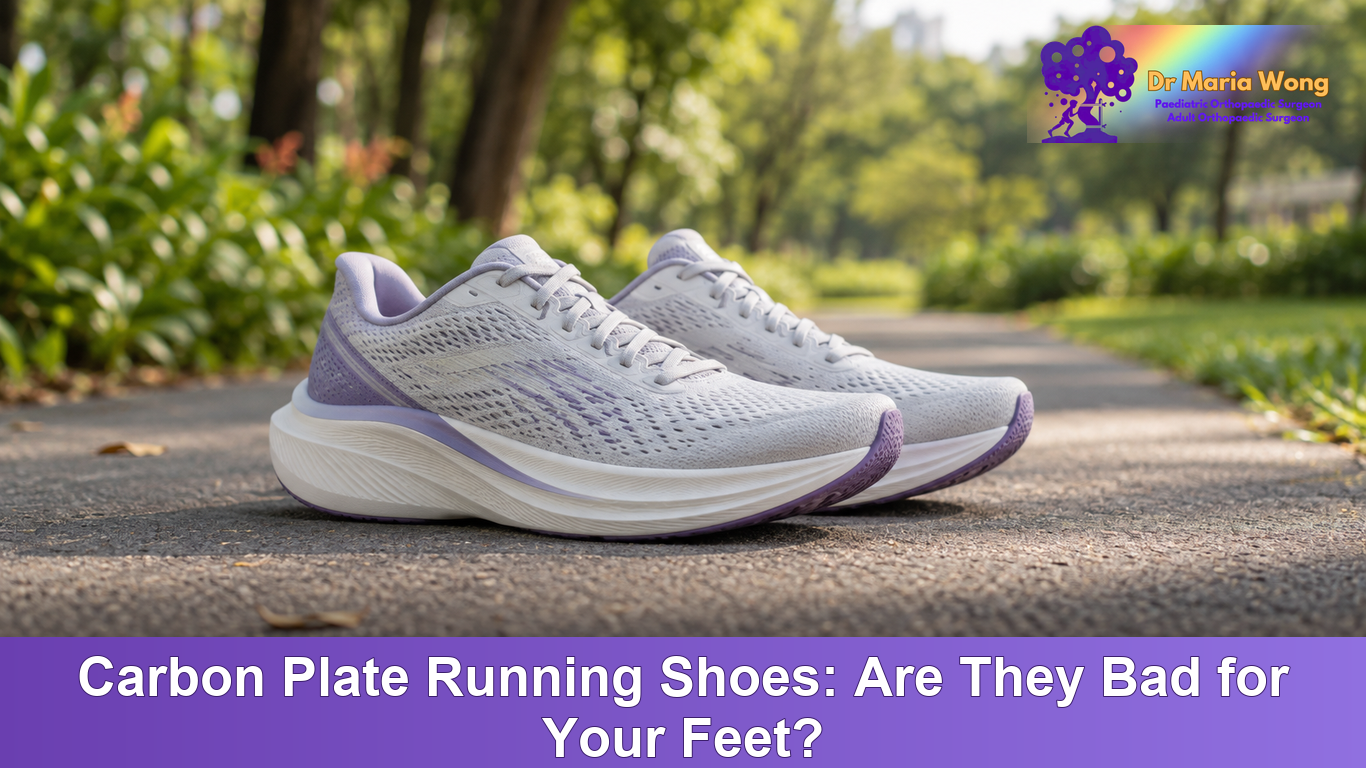
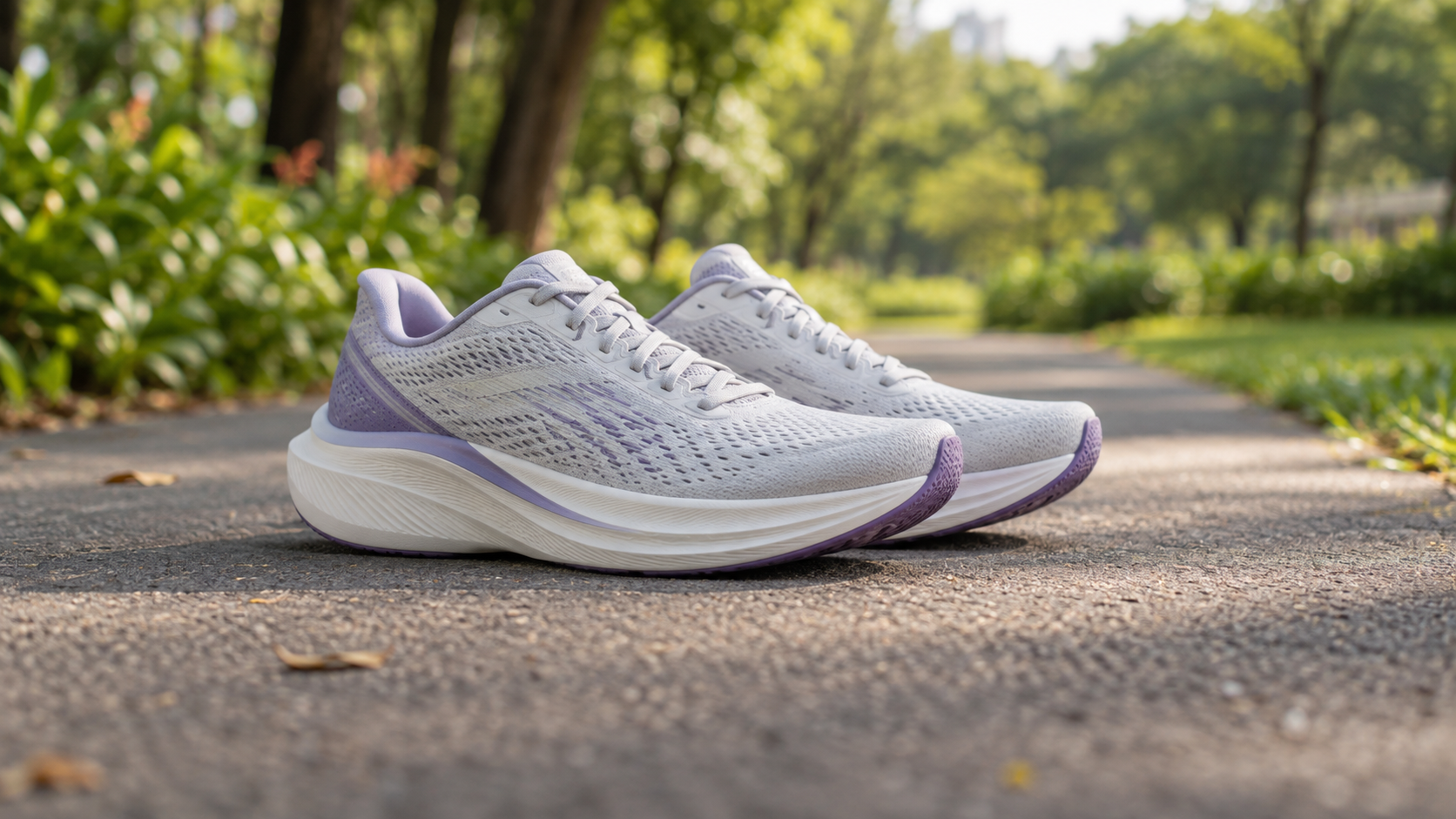
Carbon plate running shoes promise a lighter, faster-feeling run. However, runners also hear stories about sore arches, Achilles pain and stress fractures. Are these shoes bad for your feet? Not necessarily. They can improve running efficiency, but they change how your foot and ankle work. Their effect depends on the shoe, your body and how you train.
As an orthopaedic surgeon, I would look beyond the carbon label. The useful questions are whether the shoe suits your foot, whether your training has changed and whether new pain needs assessment. This guide explains the mechanics, the injury concerns and who should take extra care.
How Do Carbon Plate Running Shoes Work?
Most carbon racing shoes, often called “super shoes”, combine three features:
- A carbon fibre plate: a stiff layer inside the sole that limits how much the shoe bends along its length.
- Thick, responsive foam: material that compresses under load and springs back as the load is released.
- A rocker shape: an upward curve towards the toe that helps the foot roll forwards.
These features work together. The plate is not simply a spring that does all the work. Laboratory research found that much of the stored and returned energy came from the foam, while the plate changed toe-joint and ankle mechanics. A separate experiment found that cutting the plate reduced stiffness without significantly changing running economy in that particular shoe.
Running economy means the energy needed to hold a given pace. Better economy can help performance, but it does not guarantee a faster race or protection from injury. In addition, carbon plated running shoes vary in foam firmness, sole width, plate shape and fit.
How the Plate and Foam Change Foot and Ankle Mechanics
The toe joints bend less. During a normal push-off, the toes bend upwards at the ball of the foot. A stiff plate can reduce that movement and the energy absorbed there. The rocker also changes how the body travels over the front of the shoe.
The ankle works differently. The plate and sole geometry change the way force acts around the ankle. Some laboratory comparisons have found lower ankle work in carbon racing shoes. Therefore, it is inaccurate to say that every carbon plate always increases Achilles loading. Results depend on the full shoe design and the runner.
A tall, soft sole may feel less steady. This can matter on turns or uneven ground, especially if the shoe has a narrow base. However, height alone does not determine stability. Sole width, foam behaviour and how securely the upper holds your foot also matter. Treat a feeling of wobbling as a reason to reconsider that model.
The practical point is that softer cushioning does not tell us how much load reaches each bone or tendon. A shoe can feel comfortable while still changing where the foot takes stress.
Do Carbon Plate Running Shoes Cause Injuries?
The evidence does not support a blanket claim that they damage every runner’s feet. However, concerns deserve attention. A 2023 clinical report described five competitive athletes with navicular bone stress injuries while using carbon-plated footwear. The navicular is a small bone near the top and inner side of the midfoot.
This was a small case series, not a comparison of injury rates between shoe types. It raises a possible link but cannot prove that the shoes caused the injuries. Training demands and previous injuries also matter. Laboratory changes in movement likewise do not prove that an injury will develop.
A 2025 preprint followed 414 recreational runners using different footwear categories. Its overall injury comparison between super shoes and neutral shoes was statistically uncertain. The report was not peer reviewed, and one author had a footwear-company affiliation. It should not be treated as a final answer about safety.
My practical interpretation is to take new symptoms seriously without assuming that the plate is the sole cause.
Which Foot and Ankle Problems Need Attention?
When assessing foot pain after running, an orthopaedic surgeon considers the following problems. Apart from the reported navicular cases, these are general running conditions, not an established list of injuries caused by carbon shoes.
1. Bone Stress Injuries in the Midfoot or Forefoot
A bone stress injury develops when repeated loading exceeds the bone’s ability to recover. It can progress to a stress fracture. Pain may start during running and later affect walking. A small, clearly tender spot over a bone is a reason to stop running and seek assessment. Metatarsal injuries affect the long bones towards the toes.
Persistent pain over the top or inner midfoot deserves particular care because navicular stress injuries can be difficult to recognise and heal. Do not assume that this is normal “breaking in” pain from carbon plate running shoes.
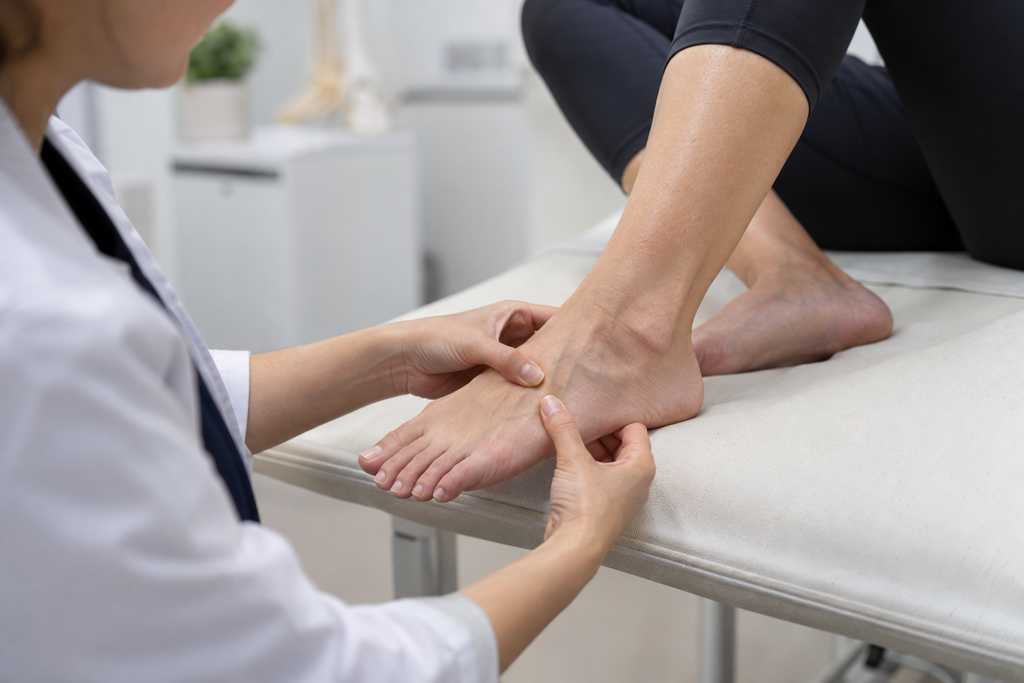
2. Achilles Tendon Pain and Calf Symptoms
The Achilles tendon connects the calf to the heel. Tendon pain may cause morning stiffness or soreness at the back of the ankle during or after exercise. A sudden increase in distance, speed or hill running can overload it.
If symptoms appear after a shoe change, consider the whole change. Did your pace increase because running felt easier? Did the heel-to-toe drop change? This is the height difference between the heel and forefoot, which is separate from the overall sole thickness. A carbon plate does not make every shoe equivalent.
3. Plantar Heel Pain and Pain Under the Ball of the Foot
Plantar fasciitis affects the strong band of tissue under the sole. It often causes pain beneath the heel during the first steps after rest. It can occur in runners wearing many types of shoes. A cushioned carbon shoe is not a proven treatment for everyone with this condition.
Pain under the ball of the foot also needs a clear diagnosis. A tight forefoot fit, pressure irritation, a joint problem or a bone stress injury can feel similar. Persistent symptoms should not be managed simply by choosing a softer sole. For help distinguishing heel-pain patterns, read Back of Heel Pain in the Morning: Achilles Tendinitis vs Plantar Fasciitis.
Who Should Avoid Carbon Plate Running Shoes or Seek Advice First?
There is no single age, foot shape or pace that makes these shoes unsuitable for everyone. However, I would advise caution in these situations:
- Current unexplained foot pain: pause running if there is focal bone pain, swelling or pain with walking. Changing shoes should not delay assessment.
- Recovery from a stress fracture or recent foot or ankle surgery: follow your treating team’s return-to-running plan before trying new racing footwear.
- Repeated stress injuries or known poor bone health: discuss training, nutrition and footwear with your clinician. A carbon plate cannot compensate for inadequate bone recovery.
- Recurrent ankle giving way or poor balance: avoid a model that feels unstable, particularly on turns.
- Existing Achilles, heel or forefoot pain: seek advice if the shoe brings on symptoms or makes them worse.
- Reduced foot sensation or a history of foot ulcers: obtain individual footwear advice because pain may not reliably warn you about pressure or skin injury.
These are reasons for an individual assessment, not evidence that carbon itself is harmful in each condition. Flat feet alone are not a reason for a blanket ban. Comfort, stability, symptoms and any need for prescribed support are more useful considerations.
Are Carbon Shoes Suitable for Beginners and Slower Runners?
Beginners do not need carbon plate running shoes to start running well. A comfortable shoe and a manageable training routine are sensible priorities. However, being a slower runner does not automatically rule out a benefit.
A 2026 study of 14 moderately trained runners found better running economy in an advanced racing shoe at speeds from 7.5 to 12 km/h. This supports possible benefits at slower paces, but the study did not establish long-term injury safety. There is no evidence-based universal pace at which all carbon shoes suddenly become suitable.
How to Introduce Carbon Plate Running Shoes Cautiously
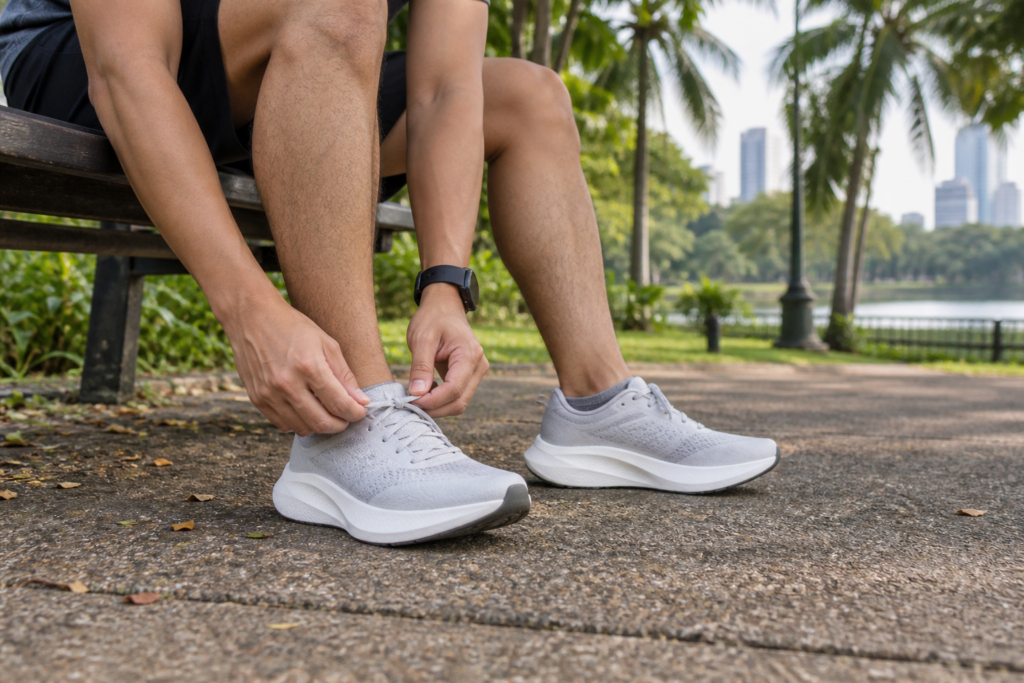
There is no validated transition schedule that guarantees injury prevention. For a runner who is pain-free and already tolerating regular training, these are practical precautions:
- Check the fit. Allow space for your toes. The heel should feel secure without pressure, rubbing or numbness.
- Start with a short, familiar run. Choose a level route and keep the first exposure well below your usual long-run distance.
- Keep other training changes small. Avoid adding a new shoe, faster sessions, more hills and extra distance together.
- Notice the response afterwards. Check for new pain later that day and the following morning. Repeated pain in the same spot warrants assessment.
- Build exposure gradually if comfortable. Keep a familiar pair available and test the racing shoes before race day.
Consider these precautions a cautious approach, not a proven protocol. Do not force a different foot strike to make a shoe “work”, or use painkillers to get through shoe-related pain.
Can You Wear Carbon Shoes for Everyday Running?
Some runners tolerate regular use, but we cannot promise that daily use is safer or more harmful for everyone. Keeping a comfortable daily trainer and using the carbon pair for selected sessions can make the transition easier to monitor. This is a practical option, not a proven rule that rotating shoes prevents carbon-related injuries.
Likewise, there is not enough long-term evidence to state that carbon shoes inevitably weaken the feet. Keep footwear decisions alongside strength work, recovery and sensible training. Our guide to marathon training injuries covers the wider training picture.
When Should You See an Orthopaedic Surgeon?
Arrange prompt assessment for persistent focal foot pain, swelling, pain during normal walking or symptoms that return with each run. Stop running while a possible bone stress injury is being assessed. Early stress injuries may not appear on an X-ray; an MRI may be needed when suspicion remains.
Seek urgent care for a sudden pop at the back of the ankle with loss of push-off, or an injury that leaves you unable to bear weight. A possible Achilles rupture needs prompt assessment.
Bring your current running shoes and details of recent training changes to the appointment. As an orthopaedic surgeon, I would assess the painful area, movement, strength and relevant injury history before deciding whether scans or treatment are needed.
Conclusion
Carbon plate running shoes are not automatically bad for your feet. Their plate, foam and rocker can improve running efficiency while changing foot and ankle mechanics. Reported bone stress injuries deserve attention, but they do not prove that every runner faces the same risk.
Choose a shoe that fits comfortably and feels stable, introduce it cautiously and respond to new symptoms. If you have persistent foot pain, a previous stress injury or an existing foot or ankle condition, consult an orthopaedic surgeon for advice that fits your situation.

Contact & Request Appointment
Schedule a consultation by using the form below, or calling her clinic or using the online booking button.
Please note that consultation is ONLY by appointment – no walk-ins.
Appointment Form 🇲🇾
NOTE: To avoid disappointment with walk-ins patients and same day appointments requests, proper appointment is necessary as the doctor may not be available all the time in clinic as she may be performing surgery.
Clinic Contact
7B-07, Level 7, Sunway Medical Centre Velocity,
Lingkaran Sunway Velocity, Sunway Velocity,
55100 Kuala Lumpur, Malaysia 🇲🇾
Mon & Fri: 10:30 – 12:30
Tue & Wed: 10:30 – 16:30
Sat: 9:00 – 12:30
Thu & Sun: Closed
L5-36, Sunway Medical Centre Damansara,
No. 2, Jalan PJU 5/1a, Kota Damansara, PJU 5,
47810 Petaling Jaya, Selangor Darul Ehsan, Malaysia 🇲🇾
Mon & Fri: 14:00 – 17:00
(by appointment only)

