
HYROX Injuries: Why 4 in 10 Racers Get Hurt
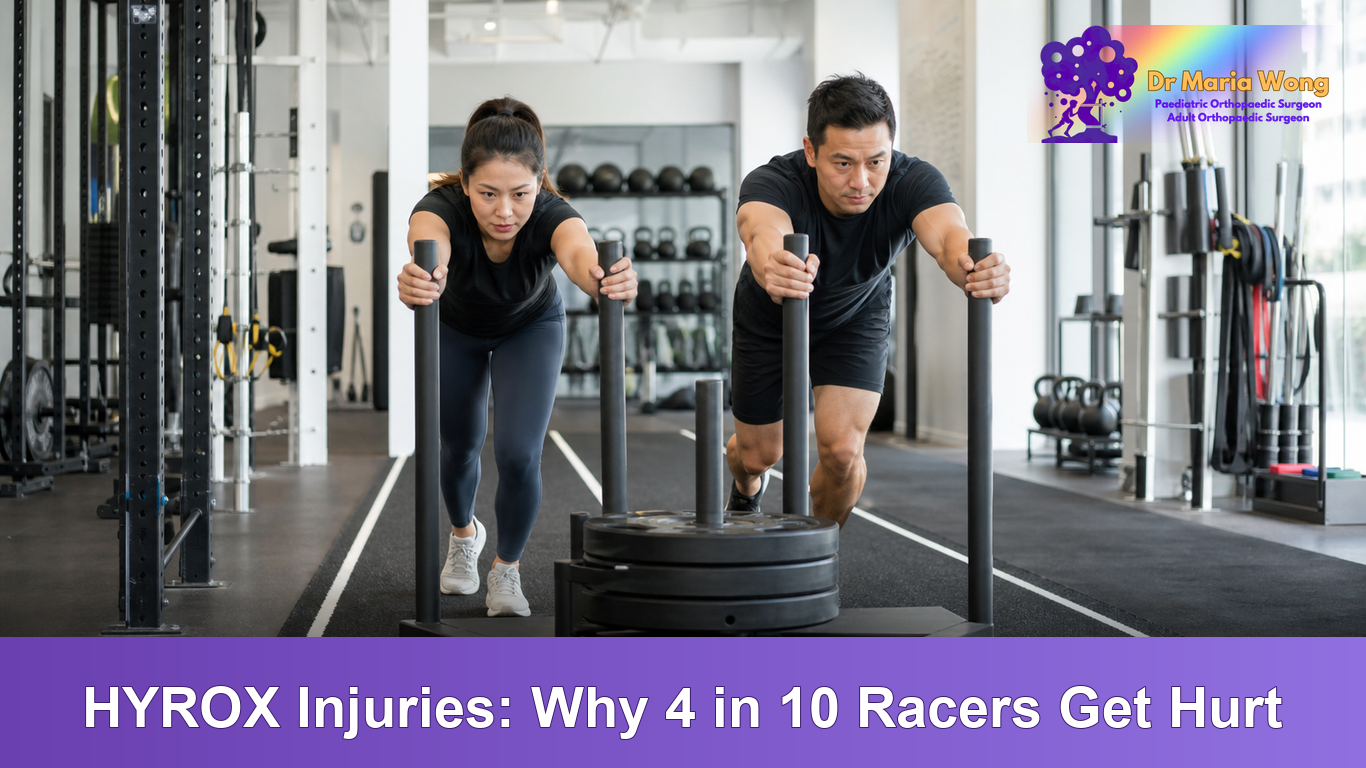

HYROX injuries are receiving attention as this fast-growing fitness race reaches a much wider group of athletes. An early 2025 study found that about four in ten surveyed HYROX athletes had experienced an injury linked to training or competition. Most reported problems were related to overload, tendinopathy or joint discomfort rather than one dramatic accident.
The sport is growing quickly. HYROX forecast 1.3 to 1.5 million participants worldwide in the 2025/26 season . In Malaysia, official training classes now run across clubs in Kuala Lumpur and Selangor . Meanwhile, recent reporting has brought the injury debate into wider public view .
This does not mean HYROX is unsafe or that four in ten people will be injured at every race. It means that rapid growth must be matched by sensible preparation. As an orthopaedic surgeon, I am less concerned by the name of the sport than by how quickly a person asks their body to tolerate running, heavy sled work, lunges, burpees and wall balls.
What Does the “4 in 10” HYROX Injury Figure Mean?
The figure comes from a peer-reviewed survey of 80 active HYROX athletes . Forty-five athletes, or 56.3%, reported no injury linked to HYROX training or competition. Therefore, 35 athletes, or 43.8%, did report an injury. The most frequent categories were overuse injuries, tendinopathies and joint discomfort.
However, the study has important limits:
It was a small, self-reported survey, so it may not represent every HYROX racer.
It did not track athletes prospectively across a full season.
It did not report injuries per 1,000 training or racing hours.
It did not prove that one station caused a specific injury.
The athletes were not mainly first-timers. They had completed 5.5 events on average.
In other words, 43.8% is an early prevalence signal, not a prediction of your personal risk. Even emerging race-medical reporting stresses that HYROX injury data is still being collected. The useful message is that gradual overload appears more common than a single major incident.
Why Hybrid Training Injuries Build Up
A standard HYROX race alternates eight 1-kilometre runs with eight functional stations. These include SkiErg, sled push, sled pull, burpee broad jumps, rowing, farmers carry, sandbag lunges and wall balls.
Each movement is familiar on its own. The challenge is the accumulated dose. A runner may have the heart and lungs for eight kilometres but not the shoulder, knee or trunk strength for the stations. A strength athlete may move a heavy sled well but lack the calf and Achilles tendon capacity for repeated running. Fatigue then changes stride, posture and control.
Overuse injuries develop when training demand rises faster than the body can adapt. The trigger may be more weekly running, heavier sleds, extra simulation sessions, faster burpees, less sleep or several changes made together. Often, there is no single “bad rep”. There is simply too much load and too little recovery.
Common HYROX Injuries and Warning Signs
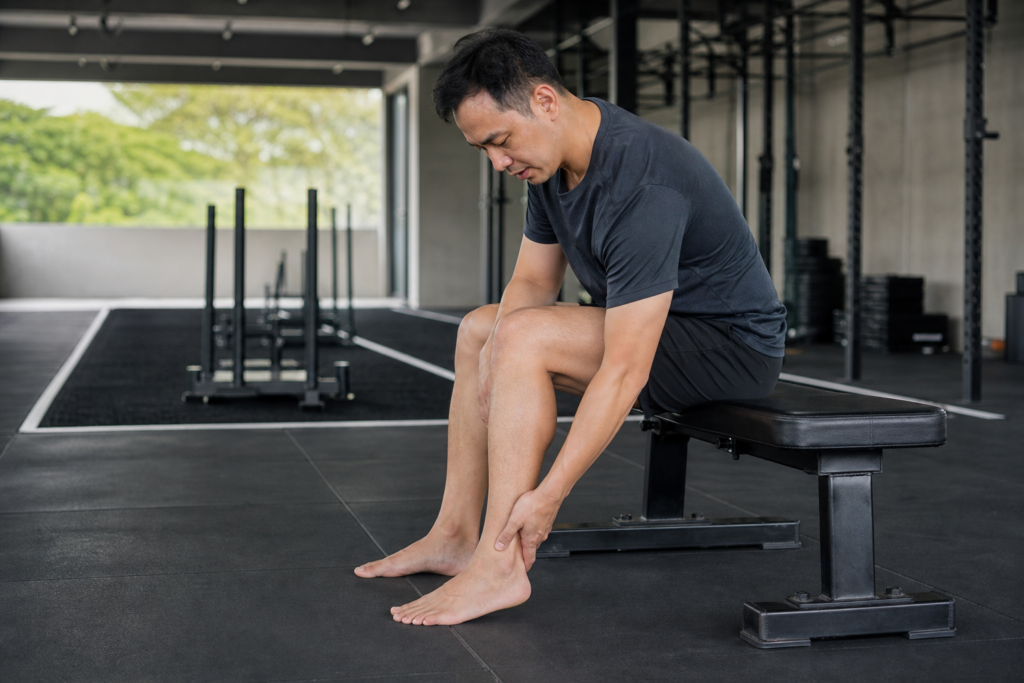
The early HYROX study did not publish a ranked list of specific body parts. Therefore, it would be inaccurate to say that it proved Achilles, patellar or rotator cuff tendinopathy are the three most common HYROX injuries. They are, however, sensible areas to watch because of the loads involved.
| Area to watch | HYROX demands that may expose it | Typical warning signs |
|---|---|---|
| Achilles tendon and calf | Repeated running, burpee broad jumps and pushing through the forefoot | Morning stiffness, focal tendon pain, pain during running or worse pain the next day |
| Patellar tendon and front of the knee | Running, sandbag lunges, burpees and high-volume wall balls | Pain below the kneecap during squats, lunges, stairs, jumping or rising from a chair |
| Rotator cuff and shoulder | SkiErg, sled pull, wall balls and repeated work with the arm raised | Pain lifting the arm, reaching overhead, lying on the shoulder or controlling the pull |
| Lower back and hip | Heavy sled work, rowing, farmers carry and fatigued lunges | Increasing ache, loss of trunk control, pain radiating into a leg or altered movement |
| Foot and shin | Rapid increases in running distance, speed or hard-floor sessions | Focal bone tenderness, pain on hopping or pain that worsens as a run continues |
Tendinopathy usually means pain linked to tendon-loading activity. It is not the same as a complete tendon tear. Nevertheless, sudden pain with a pop, bruising, marked weakness or loss of normal push-off needs prompt assessment.
Is a Sled Push Injury Caused by Bad Technique?
Technique matters, but it is only one part of a sled push injury. A reasonable body position can still become too demanding when the load, distance or number of repeats exceeds the athlete’s present capacity.
During a sled push, the ankle and calf work hard as the athlete drives into the floor. The knee and hip produce force while the trunk stays firm. If fatigue causes very short, uncontrolled steps or a collapsing trunk, load may shift to areas that are already tired. Heavy practice after a hard run can magnify this effect.
Build sled work first with controlled efforts and full recovery. Then add short periods after easy running. Full race simulations should be occasional tests, not the main session every week. A coach can help with set-up and movement, but no technique cue can replace suitable load and recovery.
Returning to Sport After 30: Age Is Not the Main Problem
Being over 30 does not make HYROX unsafe. In the published survey, 85% of participants were aged 30 or older. However, many already had a background in endurance sport, CrossFit, powerlifting or other demanding activities. The study did not show that 70% were first-timers returning after years away from sport.
The real concern is the gap between current capacity and planned training. A 38-year-old who has trained consistently for years may tolerate more than a 25-year-old who has been inactive. Previous injury, poor sleep, work stress and a sudden rise in training can matter more than the birthday itself.
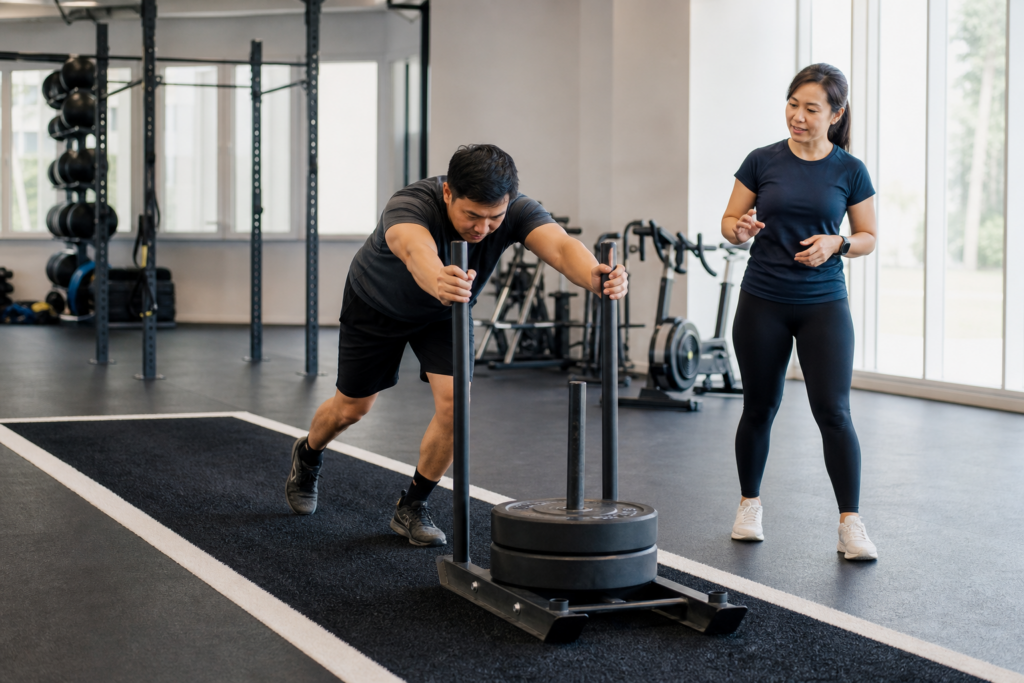
For someone returning to sport after 30, begin with a re-entry phase. The NSCA and CSCCa safe return-to-training guidance highlights the first two to four weeks after inactivity as a period that needs reduced volume and intensity. Build comfortable running and basic strength before adding hard compromised running, where each run follows a tiring station.
Seven Steps for HYROX Injury Prevention
- Start from your current level. Record what you can comfortably run, lift and recover from now. Do not programme from the athlete you were five years ago.
- Build a base before simulations. Develop easy running, calf strength, squat and lunge control, pulling strength and overhead control separately.
- Change one main demand at a time. Avoid increasing running distance, speed, sled weight and weekly session count together.
- Practise skill before fatigue. Learn burpee broad jumps, lunges, wall balls and sled technique while fresh. Add fatigue only when control is repeatable.
- Space hard sessions. Easy training and rest days allow the tendon, muscle and joint response to settle. More is not always better.
- Track the next-day response. Mild muscle tiredness can be normal. Increasing focal pain, swelling, morning stiffness or a change in movement means the dose needs review.
- Plan for the race, not just the finish time. Practise footwear, hydration and pacing. In Malaysia’s heat and humidity, also allow for extra fluid loss before and after indoor sessions.
There is no perfect weekly percentage increase that suits every athlete. Instead, progress should be based on symptoms, quality of movement, prior training and recovery. If pain is rising from week to week, the plan is not working even if the spreadsheet says the increase is small.
Achilles, Patellar and Rotator Cuff Tendinopathy Treatment
Early tendinopathy treatment usually begins by changing the load that triggers pain. This does not always mean complete rest. It may mean reducing running speed or distance, removing jumps for a time, lowering sled volume or changing wall-ball work while keeping other comfortable exercise.
Progressive strengthening is central to many tendon rehabilitation plans. The 2024 Achilles tendinopathy guideline supports tendon-loading exercise, while a 2025 rotator cuff guideline covers exercise-based rehabilitation and return to sport. However, the correct exercise, load and range depend on the diagnosis and stage of the problem.
Achilles tendinopathy treatment may include progressive calf loading and a graded return to running. Patellar tendinopathy rehabilitation often builds the thigh and hip muscles before faster running, jumping and deep loaded knee bend are restored. Rotator cuff tendinopathy commonly needs gradual shoulder strengthening and better control during pulling and overhead work.
Do not copy a generic rehabilitation programme if you have not confirmed the source of pain. Stress fractures, tendon tears, joint injuries and pain referred from the spine can feel similar at first but need different care.
When Should You See an Orthopaedic Surgeon?
Arrange an assessment if pain is getting worse, keeps returning, changes your technique or has not improved after reducing the aggravating load. Seek prompt medical care for:
- A sudden pop with immediate pain, bruising or weakness.
- Inability to bear weight or push through the foot.
- A knee that is very swollen, locked or repeatedly gives way.
- A shoulder that looks out of place or cannot be raised after an injury.
- One small area of marked bone tenderness, especially with pain at rest or at night.
- Numbness, progressive weakness or pain spreading down an arm or leg.
An orthopaedic surgeon can examine the painful area, check strength and movement, and decide whether imaging is needed. Most overuse problems do not need surgery. A clear diagnosis can help you keep training what is safe while rebuilding the capacity that is missing.
Conclusion
HYROX injuries deserve attention, but the “4 in 10” figure needs context. It comes from one small survey in which 43.8% of athletes reported a HYROX-related injury. The study points mainly towards overload, tendinopathy and joint discomfort. It does not prove that four in ten racers will be hurt at an event or that one station is to blame.
The best overuse injury prevention is a gradual match between training demand and current capacity. Build running and strength first. Learn each station while fresh. Add compromised running and race simulations later. Finally, act on persistent pain before it changes how you move. If symptoms are sudden, severe or not settling, consult an orthopaedic surgeon for an individual assessment.

Contact & Request Appointment
Schedule a consultation by using the form below, or calling her clinic or using the online booking button.
Please note that consultation is ONLY by appointment – no walk-ins.
Appointment Form 🇲🇾
NOTE: To avoid disappointment with walk-ins patients and same day appointments requests, proper appointment is necessary as the doctor may not be available all the time in clinic as she may be performing surgery.
Clinic Contact
7B-07, Level 7, Sunway Medical Centre Velocity,
Lingkaran Sunway Velocity, Sunway Velocity,
55100 Kuala Lumpur, Malaysia 🇲🇾
Mon & Fri: 10:30 – 12:30
Tue & Wed: 10:30 – 16:30
Sat: 9:00 – 12:30
Thu & Sun: Closed
L5-36, Sunway Medical Centre Damansara,
No. 2, Jalan PJU 5/1a, Kota Damansara, PJU 5,
47810 Petaling Jaya, Selangor Darul Ehsan, Malaysia 🇲🇾
Mon & Fri: 14:00 – 17:00
(by appointment only)

